


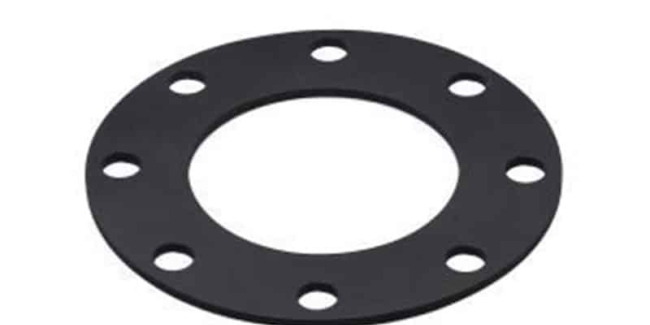
Neoprene Insertion Rubber Seals
Neoprene Insertion Seals – a versatile solution designed to provide exceptional sealing effectiveness and durability in challenging industrial applications. Our commitment to quality and innovation ensures that our Neoprene Insertion Seals offer unmatched reliability across various industries.
Key Features:
- High-Quality Neoprene Material: Our Neoprene Insertion Seals are expertly crafted using premium neoprene rubber, chosen for its excellent resistance to weathering, ozone, UV radiation, and flexibility. This material forms the foundation for seals that excel in diverse operating conditions.
- Enhanced Strength: The inclusion of reinforcing materials, such as fabric or metal inserts, elevates the structural integrity and strength of our seals. This reinforcement ensures that the seals maintain their shape and sealing effectiveness, even under high pressures or stress.
- Weather and UV Resistance: Neoprene’s inherent resistance to weathering and UV radiation makes our insertion seals ideal for outdoor applications. These seals maintain their integrity and sealing effectiveness, even in harsh environments.
- Versatile Sealing Performance: Engineered for versatility, our Neoprene Insertion Seals are suitable for a wide range of applications that require protection against moisture, dust, and other environmental elements. Their adaptability ensures reliable performance across diverse operating environments.
- Superior Compression Set Resistance: Our Neoprene Insertion Seals exhibit superior compression set resistance, retaining their original shape and sealing effectiveness even after repeated compression, ensuring long-lasting performance.
- Temperature Resilience: Neoprene Insertion Seals offer good temperature resilience, making them suitable for a range of temperatures, though not as extreme as some other materials.
- Customisation: At Advanced Seals and Gaskets, we understand that industries have unique sealing requirements. Our Neoprene Insertion Seals can be customised in terms of size, shape, and specifications to suit the specific needs of your applications.
- Easy Installation: The design of our Neoprene Insertion Seals facilitates quick installation, minimising downtime and ensuring rapid assembly, replacement, or maintenance.
As one of the UK’s leading converters of sponge and rubber materials and with a network of high-quality material suppliers, ASG can offer a vast array of seals, including those produced with neoprene insertion rubber.
Here at Advanced Seals & Gaskets Ltd, we supply the highest quality neoprene insertion rubber seals in formaskets, washers, o-rings, mouldings, and extrusions, designed to prevent leaks or gas.
All our neoprene insertion rubber seals are made to order and produced from samples or drawings provided by customers, ensuring the final product fits the application perfectly. As each seal type requires a different manufacturing process, ASG has invested heavily in various machinery, enabling us to offer both high and low quantities.
Applications:
- Construction and Architecture: Neoprene Insertion Seals find application in building envelope systems, windows, doors, and roofing, ensuring watertight and airtight seals.
- Marine and Offshore: These seals are vital in maritime and offshore applications, providing reliable sealing against saltwater exposure, UV radiation, and extreme weather conditions.
- Industrial Machinery: Neoprene Insertion Seals are essential for machinery and equipment that require dependable sealing against moisture, dust, and contaminants, reducing the risk of leaks and contamination.
- Automotive Manufacturing: These seals play a crucial role in the automotive industry, providing reliable sealing for windows, doors, body panels, and other components.
- Renewable Energy: Neoprene Insertion Seals contribute to the performance and longevity of renewable energy systems, such as wind turbines and solar panels, by providing weatherproof and airtight seals.
For information on Neoprene Insertion Seals, please complete the following quick enquiry or call us on +44(0)1384 252555.
Product Enquiry
For information on Neoprene Insertion Rubber Seals please complete the following quick enquiry or call us on +44(0)1384 252555.
Key Characteristics of Solid Neoprene Insertion Rubber:
- Colour: black
- Shore Hardness: 70°C
- Temperature: -20°C up to +110°C
- Resistances: suitable for most oils, greases, water, ozone, moderate chemicals and acids.
- Applications: Gaskets, pipe flanges, chute liner, sleeves, container seals
Introduction to Seals
Seals are essential components across a wide range of industries, designed to provide excellent resistance against air, water, oils, and other substances that could compromise the integrity of equipment or structures. One of the most popular materials used in the manufacture of seals is neoprene insertion rubber, valued for its outstanding durability and tensile strength. The addition of a reinforcement layer, such as mesh or fabric, further enhances the material’s properties, making neoprene insertion rubber suitable for demanding applications that require both flexibility and strength.
Seals can be manufactured from a variety of solid rubber materials, each selected for their specific properties and suitability for different environments. Whether preventing leaks, blocking the ingress or egress of fluids and gases, or acting as a barrier against dust and contaminants, seals are designed to meet the rigorous demands of modern industries. The versatility of neoprene insertion rubber makes it a popular choice for making gaskets, strips, and custom-shaped seals, ensuring reliable performance in both standard and specialised applications.
Types of Seals
A wide variety of seals is available to meet the diverse needs of different industries and applications. Neoprene insertion rubber seals are especially popular due to their excellent resistance to moderate chemicals, inorganic salts, and most oils, as well as their high tensile strength and durability. These properties make neoprene insertion rubber an ideal material for gaskets, strips, and custom-cut seals used in environments where exposure to harsh substances is everyday.
Nitrile rubber seals are another widely used option, offering good resistance to fuels, petroleum products, and many solvents, making them suitable for applications in the automotive and petrochemical industries. EPDM/SBR insertion rubber combines the benefits of two compounds, providing high tensile strength, tear resistance, and good weathering and ozone resistance, making it a recommended choice for outdoor and weather-exposed applications. SBR insertion rubber is a cost-effective, general-purpose material with good abrasion resistance and tensile strength, often used where chemical exposure is minimal.
Seals can be supplied in a variety of forms, including rolls, strips, and gaskets, and can be custom cut to the required size and shape. The choice of seal type depends on the specific requirements of the application, such as temperature, pressure, and the substances the seal will encounter.
What Are Solid Neoprene Insertion Rubber Seals?
Neoprene insertion rubber seals (or polychloroprene / CR) are cut from a synthetic rubber, black in colour, manufactured to the exact specification as standard neoprene solid rubber, but are produced with a mesh/fabric reinforcement layer running through the centre, referred to as the ‘insertion'.
The reinforcement gives these neoprene-insertion rubber seals even higher tensile strength and wear resistance, whilst still maintaining good chemical stability and their natural flexibility over a wide range of temperatures. It is highly durable, with a high tolerance for extreme weather and conditions, and good resistance to oil, chemicals, and ozone.
‘Seal' is a generic term for products often taking the form of cut gaskets, strips, washers, extruded or moulded profiles and edge trims. They are frequently used as a gap filler between surfaces, acting as a separator or barrier to prevent liquids, particles, or gases from escaping or penetrating the application, and in a number of vibration-dampening, sealing, and insulating applications.
Solid rubber has most of the same properties as its sponge and foam versions, but without the cushioning and bounce, offering a more durable, more resistant material.
Why Use Solid Neoprene Insertion Rubber Seals?
Solid neoprene insertion rubber seals are often used for production, but sometimes a tougher variant is required. Neoprene Insertion Rubber seals are manufactured using a material with the same formulation and compound as standard neoprene rubber, but with a mesh/fabric reinforcement layer running through the centre, increasing durability.
This 'insertion' or reinforcement also prevents the material from stretching and increases its wear and tear resistance when used for physically demanding applications and during conversion.
Neoprene insertion rubber has good resistance to chemicals, UV, ozone/weathering and moderate resistance to oils (animal/vegetable) and inorganic salts. It has a wide working temperature range of -20 °C to +110°C and is a strong material with excellent abrasion resistance.
Neoprene insertion rubber seals can be converted into a range of products, such as tubes, gaskets, and washers, for use in countless applications, including electrical insulation, engineering applications, tank seals, extruded window seals, and cable protection, to name a few.
Benefits Of Neoprene Insertion Rubber
- Popular for internal/external applications
- Increased durability and tensile strength compared to standard neoprene
- Impermeable to water and dust
- Moderate resistance to oil, chemical greases and fats.
- Excellent resistance to ozone, weathering and ageing
- Can be converted into a range of products
Grades Of Insertion Rubber Available
When considering indications for insertion of a forber, it is essential to understand the different types available and their unique properties.
NBR/SBR insertion (Nitrile) is manufactured using nitrile rubber and SBR compounds to create a material suitable for general-purpose gasketing. This commercial-grade rubber offers resistance to fuels, petroleum, oils and many solvents, making it ideal for a variety of industrial applications.
EPDM/SBR insertion rubber is another hybrid made up of 2 different compounds. This particular grade of material offers good resistance to weathering and Ozone deterioration and provides properties such as high tensile strength and tear resistance. Commercial-grade EPDM rubber is typically used for applications such as pipe seals, weather strips and dust seals.
SBR Insertion rubber (Styrene-butadiene rubber) is a cost-effective, commercial-grade, general-purpose rubber with good abrasion resistance, tensile strength and low compression set. SBR rubber is not suitable for applications involving chemicals, ozone, very strong acids, grease, fat oils and hydrocarbons
Advantages of Neoprene Insertion Rubber Seals
Neoprene insertion rubber seals are often used across a range of industries due to their excellent properties.
Neoprene insertion rubber seals are used instead of standard neoprene rubber when a more durable, stronger, abrasion-resistant material is required in an environment where exposure to or sealing against extreme weather, water, salts, oil, grease, UV/Ozone, and gases is necessary.
This material maintains its flexibility across a wide temperature range and keeps its chemical resistance properties even in very hot or cold environments. Neoprene insertion rubber can be supplied in full rolls and sheets, or easily converted into a range of bespoke sealing components which can be used for a broad range of physically demanding applications, from boating, marine sealing and insulation, through to being cut into flange seals, window seals, edge trims, and much more.
Have a Question about Acoustic Foam Gaskets?
Please contact us using the form below or by calling us on +44(0)1384 252555.